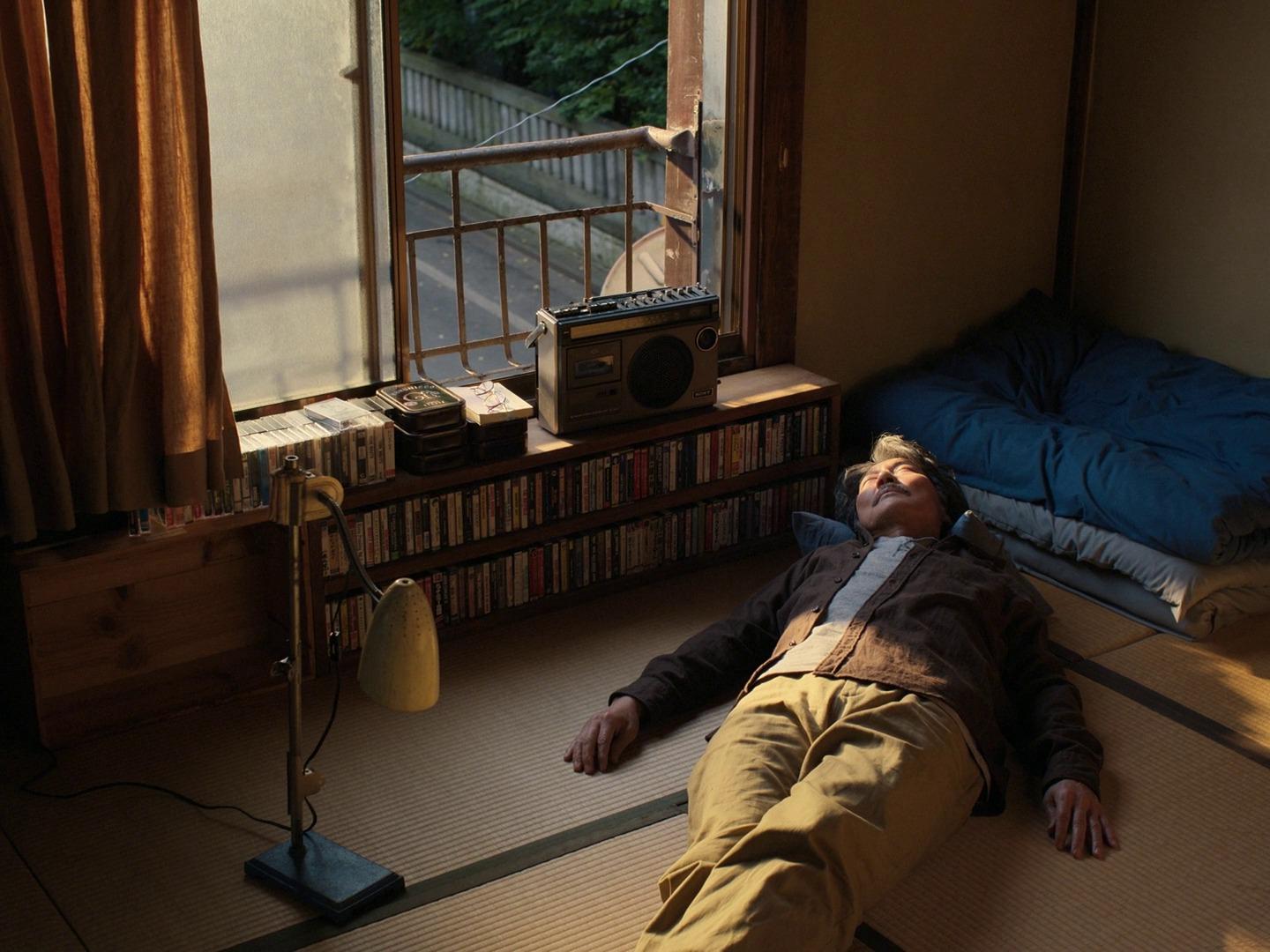
Into the east-side Tokyo the film calls home
Arrive in Tokyo (Narita or Haneda)
Tokyo works year-round for a trip like this, but the film's real subject, komorebi, the dappled light falling through leaves, is loveliest in the fresh green of late April and May or in autumn; cherry blossom in late March and early April is beautiful but brings crowds. From Narita, the Narita Express or Keisei Skyliner reach central Tokyo in roughly an hour, and the Keisei line runs on to Asakusa directly; from Haneda, the Keikyu line reaches the east side in around 40 minutes. Buy a Suica or Pasmo IC card at the airport, Tokyo is a train city and it saves fumbling for tickets all week. Book flights →
Check in on the east side, near Asakusa and the Sumida
Base yourself on the low-rise east side around Asakusa, Oshiage or the Sumida river, this is the working-class Tokyo where Hirayama lives in the film, in the shadow of the Tokyo Skytree, and its quiet mornings set the tone for the week. It is also practical: the Ginza, Asakusa and Hanzomon lines carry you across to the Shibuya-ward parks on the toilet-architecture days in around 30 to 40 minutes. Search hotels →
Senso-ji and the lanes of Asakusa
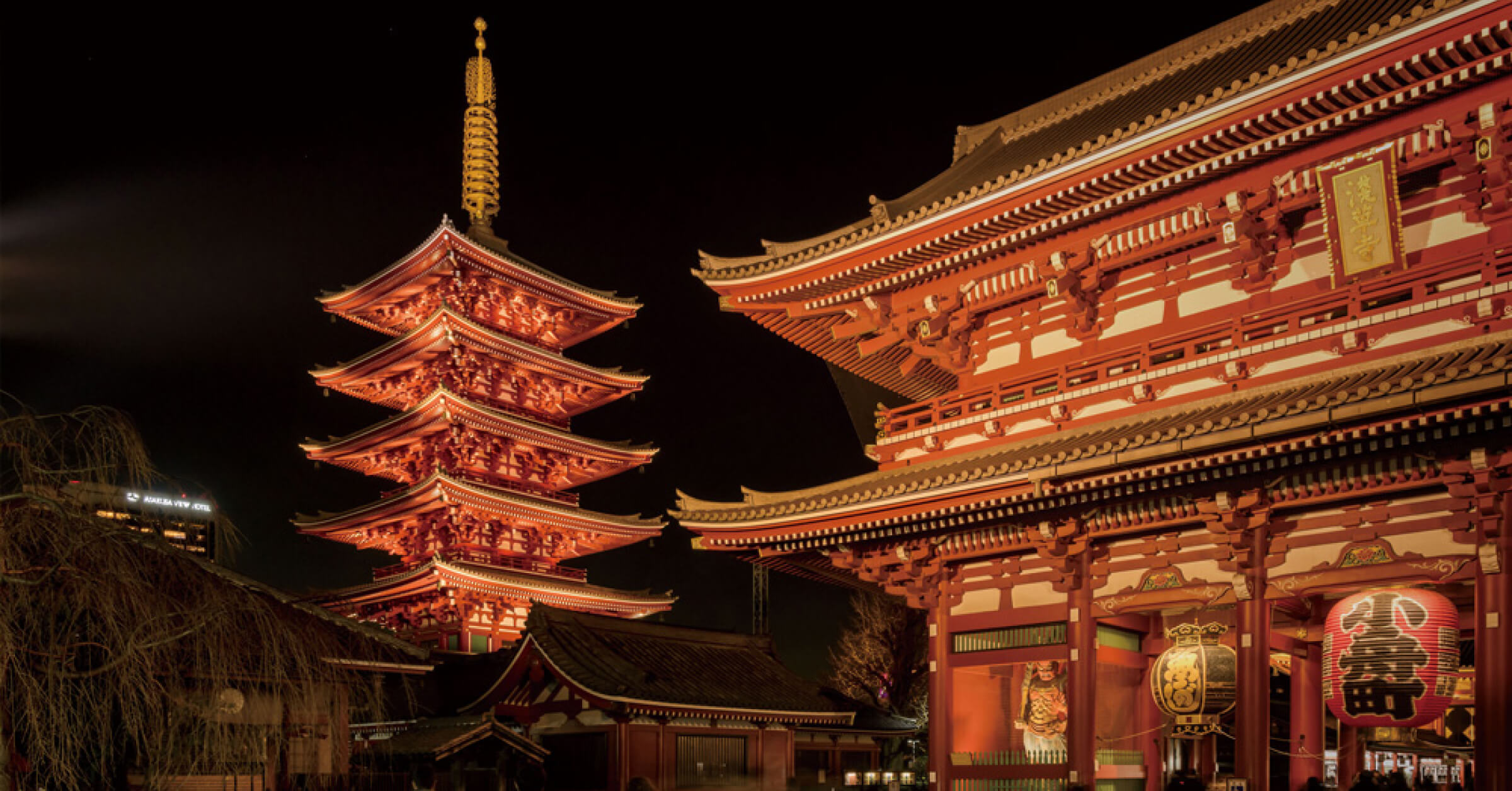
Walk to Senso-ji, Tokyo's oldest temple, and the Nakamise shopping street that leads up to it. Come in the late afternoon as the day-trippers thin out, the lanterns come on, the incense drifts, and the whole quarter softens into exactly the unhurried register the film lives in.
Sakurabashi and the Sumida at dusk
Stroll to Sakurabashi, the X-shaped pedestrian bridge over the Sumida river that Hirayama cycles across between Asakusa and the east bank. With the Skytree lit behind you and the river running dark below, it is the quietest, most cinematic ten minutes of the day.
A first, simple dinner
Keep the first night gentle: a small izakaya or a counter noodle shop in the Asakusa backstreets, the kind of unadorned meal the film treats as a genuine pleasure. An early night sets you up for the architecture walk tomorrow.
The Tokyo Toilet: an architecture walk through Shibuya's parks
Guided walk of The Tokyo Toilet project
The backbone of Perfect Days is a real public-architecture project: The Tokyo Toilet, seventeen public toilets across Shibuya ward, commissioned by the Nippon Foundation and designed by a roster of celebrated architects and designers including Tadao Ando, Shigeru Ban, Kengo Kuma, Toyo Ito and Fumihiko Maki. A guide threads the scattered sites into a coherent walk and explains the design thinking behind each. One thing to hold onto all day: these are working public facilities used by real people, so treat them as the architecture they are, not a spectacle, look, photograph the buildings, and don't linger at an occupied stall. Search architecture walking tour in Tokyo on GetYourGuide →
Shigeru Ban's transparent toilets in Tomigaya
The two most famous of the set are Shigeru Ban's coloured-glass toilets, a short walk apart in the Yoyogi Fukamachi Mini Park and the Haru-no-Ogawa Community Park in Tomigaya. The glass is designed to turn opaque the instant you lock the door, though the mechanism has occasionally been reported to falter in cold weather, so treat it as a piece of public art first and don't rely on the trick. Lit up after dark, they glow like paper lanterns.
Komorebi lunch on the Yoyogi-Hachimangu steps
This is the film's quiet heart. Buy a sandwich and a carton of milk from a convenience store, climb the stone steps to Yoyogi-Hachimangu shrine, and eat on a bench under the tall trees while the light shifts through the leaves, the komorebi Hirayama photographs on his little film camera. At the foot of the same steps sits Toyo Ito's contribution to the project, a cluster of three mushroom-like white toilet pods.
Kengo Kuma's toilet 'village' at Nabeshima Shoto Park
A short walk into the quiet, wealthy streets of Shoto brings you to Nabeshima Shoto Park and Kengo Kuma's design, five small huts clad in timber louvres, scattered among the greenery like a tiny village. It is the park where, in the film, Hirayama coaxes a lost child out of a stall, and the calmest of all the sites to sit for a while.
A slow afternoon in Yoyogi Park
Finish in Yoyogi Park, a few minutes north, broad lawns and long tree-lined avenues that are one of central Tokyo's great places to do nothing at all. It is the film's rhythm made literal: sit, watch the light, let the afternoon go. The park sits right beside Meiji Jingu, which you'll enter first thing tomorrow.
Dinner in the Tomigaya backstreets
The Tomigaya and Yoyogi-Uehara backstreets, just west of the parks, have quietly become one of Tokyo's best low-key eating neighbourhoods, small bistros, bakeries and wine bars with none of Shibuya's noise. A relaxed dinner here before the ride back east suits the day.
Meiji Jingu's forest, Shibuya's backstreets and the Ebisu toilets
Meiji Jingu at opening
Start in the forest of Meiji Jingu, the great shrine set in a hand-planted wood beside Harajuku. Come at opening, when the long gravel approach under the trees is near-empty and the komorebi falls exactly as the film frames it. Entry to the grounds is free; the shrine opens around sunrise and closes at dusk, with times shifting month to month.
Tadao Ando's toilet at Jingu-Dori Park
Walk south towards Shibuya and stop at Jingu-Dori Park in Jingumae, where Tadao Ando's contribution to The Tokyo Toilet stands, a low, circular concrete structure wrapped in a screen of vertical louvres, unmistakably his hand. It is the bridge between the shrine's calm and the city proper.
Guided walk of Shibuya's backstreets
A local guide is the easiest way to read Shibuya beyond the famous crossing, the warren of backstreets, the small shrines and the everyday corners that the film's cleaning routes wind through. Grab lunch somewhere simple along the way; the walk is as much about pace as it is about sights. Search walking tour in Shibuya on GetYourGuide →
The Ebisu toilets: Maki and Wonderwall
Hop one stop south on the Yamanote line to Ebisu for two more of the set within a short walk of each other. Fumihiko Maki's toilet in Ebisu East Park is a light pavilion under a sweeping curved roof, locals call it the 'squid toilet', set in a playground long nicknamed 'octopus park'; Masamichi Katayama's Wonderwall design in Ebisu Park is a maze of interlocking concrete walls inspired by old communal toilets. In the film, Hirayama cleans the Ebisu East Park facility.
An evening in Ebisu
Ebisu is a relaxed, grown-up place to end the day, full of small izakaya and standing bars around the station. Eat here before the easy ride back to your east-side base.

Sumida, Hokusai and the film's sento
The Sumida Hokusai Museum
Spend the morning at the Sumida Hokusai Museum, a sleek Kazuyo Sejima building devoted to the great printmaker, who was born and lived in this district. It is open 09:30 to 17:30 and closed on Mondays (or the following Tuesday when Monday is a public holiday), swap this day with Day 5 if you land here on a Monday. General admission is around ¥400 (about £2).

Lunch in Kyojima's Showa-era streets
Head north to Kyojima, one of the last pockets of old, low-rise east Tokyo, narrow lanes, tin-fronted houses and retro shops that survived the wars and the developers. Take an unhurried lunch at a small local spot; this is the texture of the neighbourhood the film so loves.
A guided sento or onsen experience
Sento, the neighbourhood public bathhouses at the emotional core of Perfect Days, run on quiet etiquette that can feel daunting the first time: wash thoroughly at the seated showers before you get in, keep your small towel out of the water, and check the tattoo policy in advance as it varies house to house. A guided first-timer's sento or onsen experience walks you through all of it, and it is a good fallback if you're here on a Saturday, when the film's own bathhouse is closed. Search sento onsen experience in Tokyo on GetYourGuide →
A soak at Denkiyu, the film's bathhouse
Denkiyu, a family-run sento in Kyojima that opened in 1922, is the real bathhouse Hirayama visits, complete with a painted Mount Fuji above the tiled bath. It opens at 15:00 and, crucially, is closed on Saturdays, plan around that, and use the guided experience above instead if your only free day is a Saturday. Entry is a few hundred yen paid at the counter; bring a small towel or buy one there, and follow the wash-first etiquette.
Dinner under the Skytree
Dry off and drift back towards Oshiage and the Tokyo Skytree for dinner. After a bath, a simple meal and the tower glowing overhead is the whole point, the ordinary made quietly perfect, which is the film in a sentence.
Jimbocho: book town, curry and quiet reading
Guided walk of Jimbocho book town
Jimbocho, in Chiyoda, is the world's largest secondhand-book district, more than 170 shops packed around Yasukuni-dori, many built facing north so the sun never fades the stock. A local guide unlocks the history and points you to the specialists you'd never find alone. It is the natural home for the film's reading habit: Hirayama winds down every night with a secondhand paperback. Search book town walking tour in Jimbocho on GetYourGuide →
Browse the secondhand shelves
Then simply browse. The shops range from cavernous general dealers to tiny specialists in art, film, poetry and English-language paperbacks, and most have a rack of hundred-yen classics by the door, the exact kind of cheap, well-thumbed novel the film lingers on. Jimbocho Station on the Hanzomon, Mita and Shinjuku lines sits right in the middle.
Curry lunch in the 'curry battleground'
Jimbocho is as famous for curry as for books. Bondy, tucked up a staircase, is widely credited with starting the district's curry craze, a rich, mellow European-style roux served with a buttered steamed potato on the side. Expect a queue at peak times; it moves.
Coffee at a Jimbocho kissaten
Retreat with your finds to a kissaten, the old-school coffee house the district does so well. Sabouru, open since 1955 and marked by a totem pole out front, is all dark wood, thick toast and siphon coffee, a proper quiet corner to read, which is really the whole ritual of this trip.
Cassette culture and a listening hour
Perfect Days runs on cassettes, Lou Reed, Patti Smith, Otis Redding played on an old car deck, and Tokyo still keeps that habit alive. Seek out a listening bar or an old kissa where the owner plays records and tapes over a careful sound system, order one drink, and just listen. It is the film's final lesson: give something your full, unhurried attention.
A last morning, a tea ceremony, and home
A last komorebi walk by the Sumida
Give the last morning back to the river. Walk the tree-lined paths of Sumida Park near your base, with the Skytree on one side and the water on the other, and watch the light come through the leaves one more time, the ritual the whole week has been building towards.
A tea ceremony
Close with a formal tea ceremony, a slow, deliberate hour in a tatami room that is the perfect counterweight to a week spent noticing small things. Sessions run across central Tokyo and should be booked ahead. Search tea ceremony in Tokyo on GetYourGuide →
One last kissaten coffee
Fit in a final coffee at a kissaten near your base before you pack, Tokyo's old coffee houses are the easiest place in the world to sit quietly and do nothing for half an hour, which is a fitting way to say goodbye to this particular city.
Onward to the airport
Head back in good time: allow roughly an hour on the Narita Express or Keisei Skyliner to Narita, or around 40 minutes on the Keikyu line to Haneda, plus a check-in buffer. Tap out with the same Suica or Pasmo you tapped in with on day one. Book flights →